Source Multi-layer Food Warmer Cart for Catering, Events, and Buffets
Source a Multi-layer Food Warmer Cart from 30 verified listings to compare specifications like capacity, voltage, and dimensions. Buyers can evaluate options ranging from single to double doors with varying power and layer counts for commercial use.
Key considerations
Products List


Restaurant Electric Food Warmer Trolley Food Warmer Cart for Catering
$1091.00 - $1364.00
MOQ: 1 Pieces

New Style Electric Restaurant Food Warmer Cart with Two Doors for Sale
$1452.00 - $1528.00
MOQ: 1 Pieces


Mobile Food Warmer Carts Single Door Food Warmer Cart Stainless Food Warmer Cart
$605.00 - $703.00
MOQ: 1 Pieces

5-Layer Commercial Banquet Warming Cabinet Restaurant Food Warmer Cart with Wheels
$605.00 - $703.00
MOQ: 1 Pieces

22-Layer Premium Heavy-Duty Food Warmer Cart for Event Catering Needs
$1025.00 - $1095.00
MOQ: 5 Pieces

22-Tier Double Door Insulated Food Warmer Cart for Commercial Catering
$920.00 - $943.00
MOQ: 1 Pieces


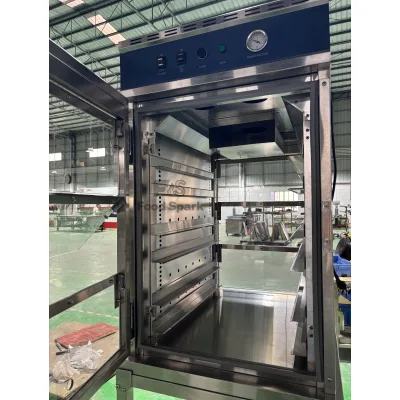
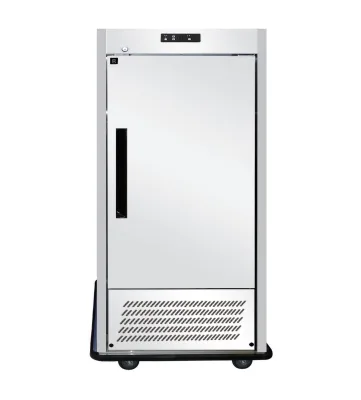

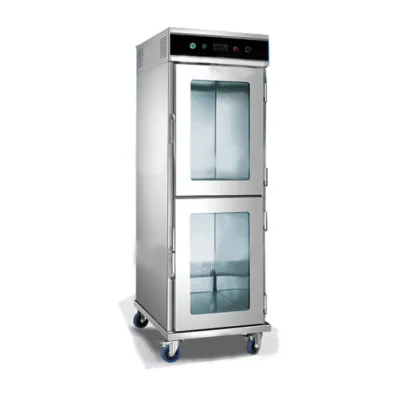
Hot Selling Stainless Steel Holding Heater Cart Food Warmer Heated Cabinet
$1031.16 - $1340.51
MOQ: 1 pieces


Comprehensive Sourcing Guide
Strategic Sourcing Guide for Multi-Layer Food Warmer Carts
Understanding Technical Specifications and Configuration Variability
When sourcing a multi-layer food warmer cart, the primary challenge lies in navigating the significant variance in technical specifications across different product models. The market does not offer a single standardized unit; rather, it presents a spectrum of configurations tailored to specific capacity and operational needs. Buyers must first distinguish between models based on their layer count, as this directly dictates the throughput and storage volume of the unit. Available configurations observed in the current supply base range from compact units with five layers to high-capacity industrial models featuring eleven layers. The physical dimensions of these units vary substantially to accommodate these differences. For instance, a model designated as UHC-11A features an external footprint of 790mm in width, 975mm in depth, and 1750mm in height, with an internal usable space of 540mm by 680mm by 1380mm. In contrast, a model labeled SY-FWC11CJ presents a larger profile, measuring 1540mm in width, 975mm in depth, and 1795mm in height.
Power consumption and electrical requirements are equally critical variables that must be matched to the buyer's facility infrastructure. Most units in this category operate on a standard 220V supply, often specified with a 50Hz frequency. However, the power rating fluctuates based on the heating element size and the number of layers. Some configurations, such as the UHC-902, are rated at 2.6kw, while others like the SY-FWC16W may draw up to 2700W. It is essential to verify the specific wattage of the chosen model to ensure the electrical circuit can handle the load without tripping breakers. Furthermore, the door configuration significantly impacts usability. While some units utilize a single door, others are equipped with double tempered glass doors, which allow for visual monitoring of the food without releasing heat. The insulation temperature range is another vital technical parameter, with many units designed to maintain a safe holding temperature between 35°C and 85°C, ensuring food safety compliance during service.
Compliance Verification and Certification Standards
In the realm of commercial kitchen equipment, compliance with safety standards and certifications is non-negotiable. Buyers must rigorously verify the certification status of any supplier before proceeding with a purchase. While some product listings explicitly indicate the presence of CE certification, indicating conformity with health, safety, and environmental protection standards for products sold within the European Economic Area, this status is not universal across all models or suppliers. The presence of a CE mark on a specific model, such as the SY-FWC5, should be treated as a verified attribute for that specific unit, but buyers cannot assume all multi-layer food warmer carts in a catalog possess this certification.
Beyond specific product certifications, buyers should verify the adherence to general manufacturing standards. The physical dimensions of the units often serve as a proxy for adherence to specific design standards, such as the W790xD975xH1750mm standard observed in certain models. However, relying solely on dimensions is insufficient for compliance. Buyers must request and validate the actual certification documents provided by the manufacturer. It is crucial to understand that "Customized" and "Non-Customized" product attributes often correlate with different certification pathways. A customized unit may undergo a different testing protocol than a standard non-customized model. Therefore, the procurement strategy must include a direct request for the certificate of conformity, ensuring that the electrical safety and material composition meet the regulatory requirements of the destination market. Do not rely on general background information regarding CE standards; instead, demand proof of certification for the specific model number being ordered.
Cost Drivers and Pricing Structure Analysis
The pricing structure for multi-layer food warmer carts is influenced by a complex interplay of factors, including capacity, material quality, and customization options. The observed price range in the market spans from approximately 30 USD to 8500 USD, a vast disparity that reflects the diversity in product complexity. The lower end of this spectrum typically corresponds to smaller, single-door units with fewer layers and standard packaging, while the upper end is reserved for large, multi-layer commercial units with advanced features like timing devices and double glass doors.
Material composition is a primary driver of cost. Units constructed from stainless steel are generally positioned higher in the price bracket due to the durability and hygiene benefits they offer compared to alternative materials. The weight of the unit is also a significant indicator of material density and cost. For example, a unit with a net weight of 130kg and a gross weight of 158kg will typically command a different price point than a lighter, less robust model weighing 135kg net. Additionally, the packaging method influences the final landed cost. Options such as "Carton with Plywood Case" or "Export Carton or Plywood Cases" add to the manufacturing and shipping expenses. Buyers should be aware that customization, whether in terms of dimensions or functional additions like timing devices, invariably increases the unit price. The minimum order quantity (MOQ) also plays a role in cost efficiency, with observed ranges starting as low as one unit, allowing for small-scale procurement, though bulk orders may offer different pricing tiers.
Operational Applications and Functional Requirements
The application of multi-layer food warmer carts is diverse, catering primarily to commercial environments where food safety and temperature control are paramount. These units are explicitly designed for commercial usage, making them suitable for settings such as buffet lines, catering services, food trucks, and large-scale event management. The functional capabilities of these carts often include multi-layer heating, keeping warm, and general heating functions, which are essential for maintaining food quality over extended periods.
The specific operational needs of a buyer will dictate the choice of model. For instance, a mobile food warmer cart, as indicated by specific product naming, is ideal for venues requiring portability and flexibility. These units often feature a plug type of 16A, ensuring compatibility with standard commercial electrical outlets. The control method is another critical factor for operational efficiency. Some models utilize a mechanical rotary button for simple, robust temperature control, which is less prone to electronic failure in high-traffic kitchen environments. The spacing between layers, such as the 12cm spacing found in certain five-layer models, determines the type and size of food pans that can be accommodated. Buyers must assess their specific menu requirements to ensure the internal dimensions and layer spacing align with their serving vessels. Furthermore, the presence or absence of a timing device can be a deciding factor for operations that require precise heating cycles or automated shut-off features for safety and energy conservation.
Supplier Evaluation and Origin Verification
Evaluating suppliers for multi-layer food warmer carts requires a focus on transparency regarding product origin and manufacturing capabilities. The majority of the observed supply base originates from Guangdong, China, a region known for its robust manufacturing infrastructure in kitchen equipment. However, the specific origin, whether listed as "Guangdong China" or broadly as "China," should be verified against the buyer's sourcing preferences and any trade restrictions that may apply.
When assessing a supplier, buyers should examine the consistency of their product data. Discrepancies in specifications, such as conflicting weight measurements (e.g., 130kg vs. 154kg for similar models) or varying standard dimensions for the same model number, can indicate a lack of quality control or data management issues within the supplier's organization. The packaging method is another indicator of supplier professionalism. Suppliers offering "Wood Package" or "Export Carton" options demonstrate an awareness of international shipping requirements. Buyers should also inquire about the customization capabilities of the supplier. While some models are listed as "Non-Customized," others offer "Customized" options, suggesting a flexible manufacturing process. It is advisable to request samples or detailed technical drawings to verify that the supplier can deliver units that meet the specific dimensional and functional requirements of the buyer's operation.
Quality Control and Long-Term Procurement Considerations
Ensuring the long-term reliability of multi-layer food warmer carts requires a proactive approach to quality control and procurement planning. The durability of the unit is heavily dependent on the materials used, particularly the stainless steel construction, which resists corrosion and is easy to clean. Buyers should verify the thickness and grade of the steel used, as this directly impacts the lifespan of the equipment. The packaging, whether it is a standard carton or a reinforced plywood case, plays a crucial role in protecting the unit during transit. Damage during shipping can compromise the structural integrity of the cart, leading to premature failure.
Long-term procurement considerations also involve the availability of spare parts and maintenance support. Units with complex features, such as timing devices or double glass doors, may require specific replacement parts. Buyers should confirm that the supplier can provide a supply chain for these components. The electrical components, including the heating elements and control mechanisms, are also points of potential failure. Regular maintenance schedules should be established to inspect the insulation temperature capabilities and ensure the unit continues to operate within the 35-85°C range. Finally, buyers should consider the scalability of their procurement. If the initial order is small, the supplier should be capable of scaling up production to meet future demand without compromising quality or lead times. By focusing on these quality and logistical factors, buyers can secure a reliable supply of multi-layer food warmer carts that will serve their commercial operations effectively for years to come.
Comparative Analysis of Key Model Specifications
To assist buyers in making informed decisions, the following table summarizes the key technical differences between several observed models. This comparison highlights the variance in capacity, dimensions, and power requirements, which are critical for matching the right equipment to specific operational needs.
| Model Number | Layers | Door Type | Power (W) | Net Weight (kg) | Standard Dimensions (WxDxH mm) | Customization | Timing Device |
|---|---|---|---|---|---|---|---|
| UHC-11 | 11 | Single Door | 2220 | 130 | 790 x 975 x 1750 | Non-Customized | Without |
| UHC-902 | 10 | Double Tempered Glass | 2600 | 154 | 645 x 835 x 1880 | Non-Customized | Without |
| UHC-11A | 11 | Single Door | 2220 | 135 | 790 x 975 x 1750 | Non-Customized | Without |
| SY-FWC5 | 5 | N/A | 2700 | 135 | 790 x 975 x 1350 | Customized | With |
| SY-FWC11CJ | 11 | N/A | 2700 | N/A | 1540 x 975 x 1795 | N/A | N/A |
| SY-FWC16W | 5 | N/A | 2700 | N/A | 805 x 880 x 1760 | N/A | N/A |
Note: Data points are derived from observed product listings and represent specific configurations. Not all attributes apply to every model listed. Buyers must verify the exact specifications of the unit they intend to purchase.
This comparative view underscores the necessity of detailed specification checks. The variation in layer count, from 5 to 11, directly impacts the volume of food that can be held, while the door type affects both heat retention and visual access. Power consumption differences, ranging from 2220W to 2700W, necessitate careful electrical planning. By utilizing this structured approach to evaluation, buyers can navigate the complexities of the multi-layer food warmer cart market with confidence, ensuring they select equipment that aligns with their technical, operational, and financial requirements.
FAQs
What is the voltage requirement for these carts?
Most units operate on a standard 220V supply, often specified with a 50Hz frequency. Buyers must verify the specific wattage of the chosen model to ensure the electrical circuit can handle the load without tripping breakers.
Which models offer timing devices for automated control?
Some configurations include a timing device, while others are listed without one. The presence of this feature often correlates with customized options and may increase the unit price compared to standard non-customized models.
Can I find units with double tempered glass doors?
Yes, certain models are equipped with double tempered glass doors to allow visual monitoring without releasing heat. This feature is distinct from single-door configurations and impacts the overall usability and cost of the unit.
How does the layer count affect the capacity?
Available configurations range from compact units with five layers to high-capacity industrial models featuring eleven layers. The physical dimensions and internal space vary substantially to accommodate these differences in storage volume.
What is the typical insulation temperature range?
Many units are designed to maintain a safe holding temperature between 35°C and 85°C. This range ensures food safety compliance during service in commercial environments like buffet lines or catering services.
Are there options for customized dimensions or features?
Some models offer customized options, while others are listed as non-customized. Customization can affect certification pathways and manufacturing protocols, so buyers should request specific details for their required configuration.
What packaging methods are used for shipping?
Options include export cartons, plywood cases, or wood packages depending on the model. The packaging method influences the final landed cost and ensures protection during transit for international orders.